Have you ever wondered what makes gold so unique? If you are asking what is the atomic number of gold, you will discover why this precious metal captivates scientists.
This comprehensive guide explains exactly what is the atomic number of gold and explores its scientific, historical, and industrial significance. You will learn about its unique chemical properties, real-world applications, and vital economic impact to master your understanding of this fascinating element.
The Core Chemistry: What is the Atomic Number of Gold?
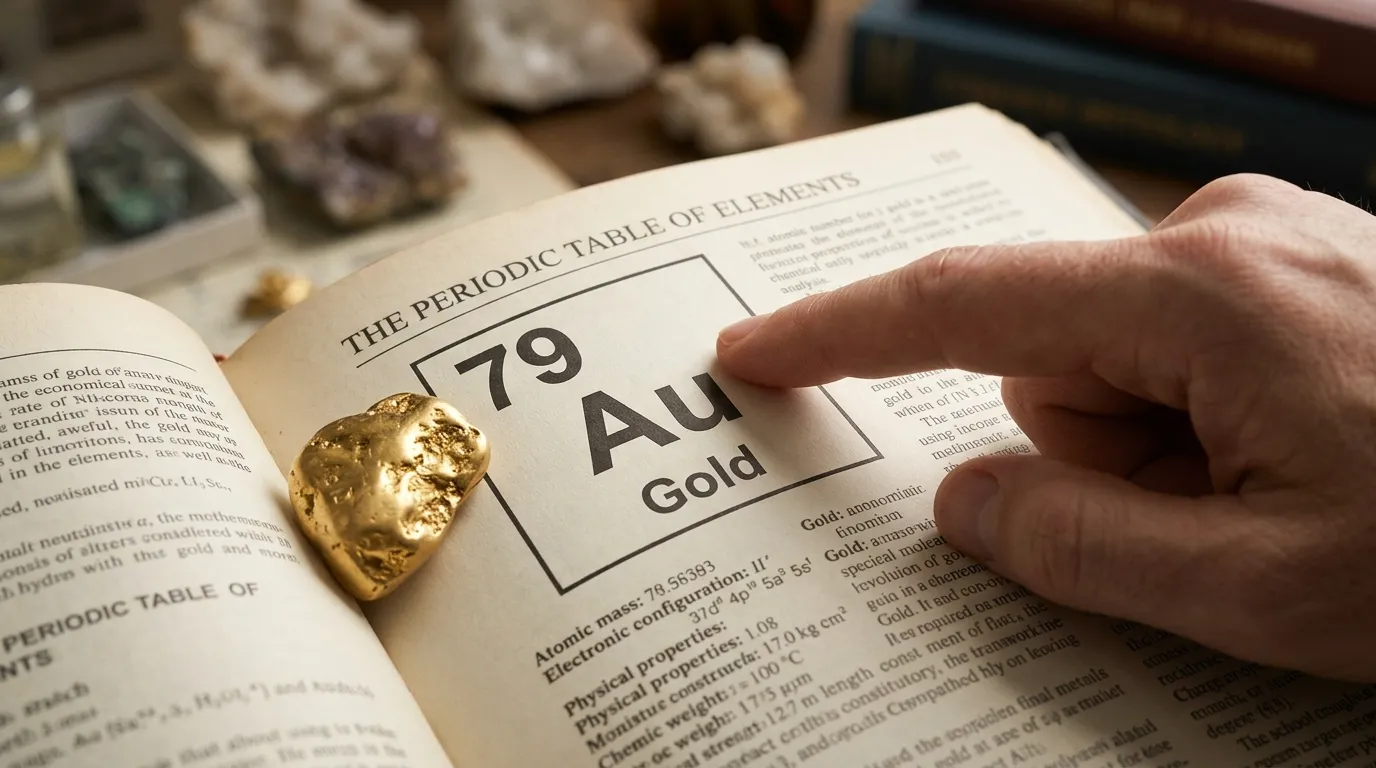
When diving into the building blocks of matter, understanding the fundamental properties of elements is essential. If you find yourself asking what is the atomic number of gold, the answer lies deep within the nucleus of its atoms. The atomic number is 79. This specific number is not just a random label; it defines the very essence of the element.
Understanding Atomic Numbers
An atomic number represents the total number of protons found in the nucleus of an atom. In chemistry, this number dictates the chemical identity of the element. Because you want to know what is the atomic number of gold, you must understand that every single atom of gold in the universe contains exactly 79 protons. If an atom had 78 protons, it would be platinum. If it had 80 protons, it would be mercury. The proton count dictates the electron count in a neutral atom, which in turn determines how the element interacts with everything around it.
Why Gold Holds the Number 79
The fact that what is the atomic number of gold is 79 places it uniquely in the periodic table. It resides in Group 11 and Period 6, classifying it as a transition metal. Its heavy nucleus creates a strong positive charge, which pulls its orbiting electrons closer than they would be in lighter elements. This relativistic effect explains many of gold’s defining physical traits, including its distinct yellowish hue. You can explore more about these foundational chemical principles through the International Union of Pure and Applied Chemistry.
Gold’s Unique Properties Driven by Its Atomic Structure
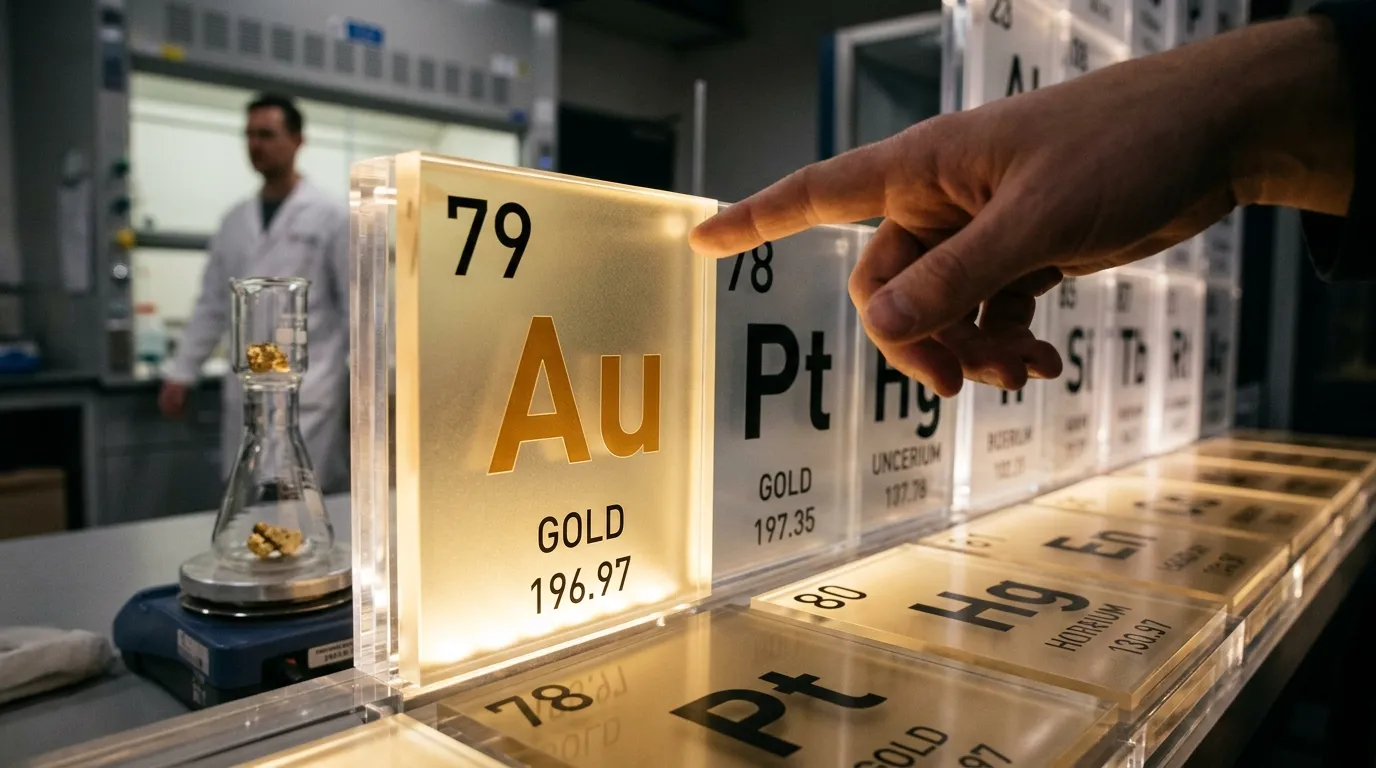
Once you understand what is the atomic number of gold, you can begin to appreciate how this structural foundation gives birth to extraordinary physical and chemical properties.
Unmatched Malleability and Ductility
Gold is the most malleable and ductile metal known to humanity. A single ounce of gold can be beaten into a translucent sheet measuring roughly 300 square feet. Alternatively, it can be stretched into a wire stretching over 50 miles long without breaking. This remarkable flexibility occurs because the layers of gold atoms can slide over each other easily without fracturing the metallic bonds holding them together.
Resistance to Tarnish and Corrosion
Another reason scientists frequently discuss what is the atomic number of gold is its status among the noble metals. Gold does not react with oxygen at any temperature, meaning it will never rust or tarnish. It remains impervious to most acids and bases. This chemical inertness is due to its stable electron configuration, making it highly unreactive.
Historical and Cultural Significance of Gold
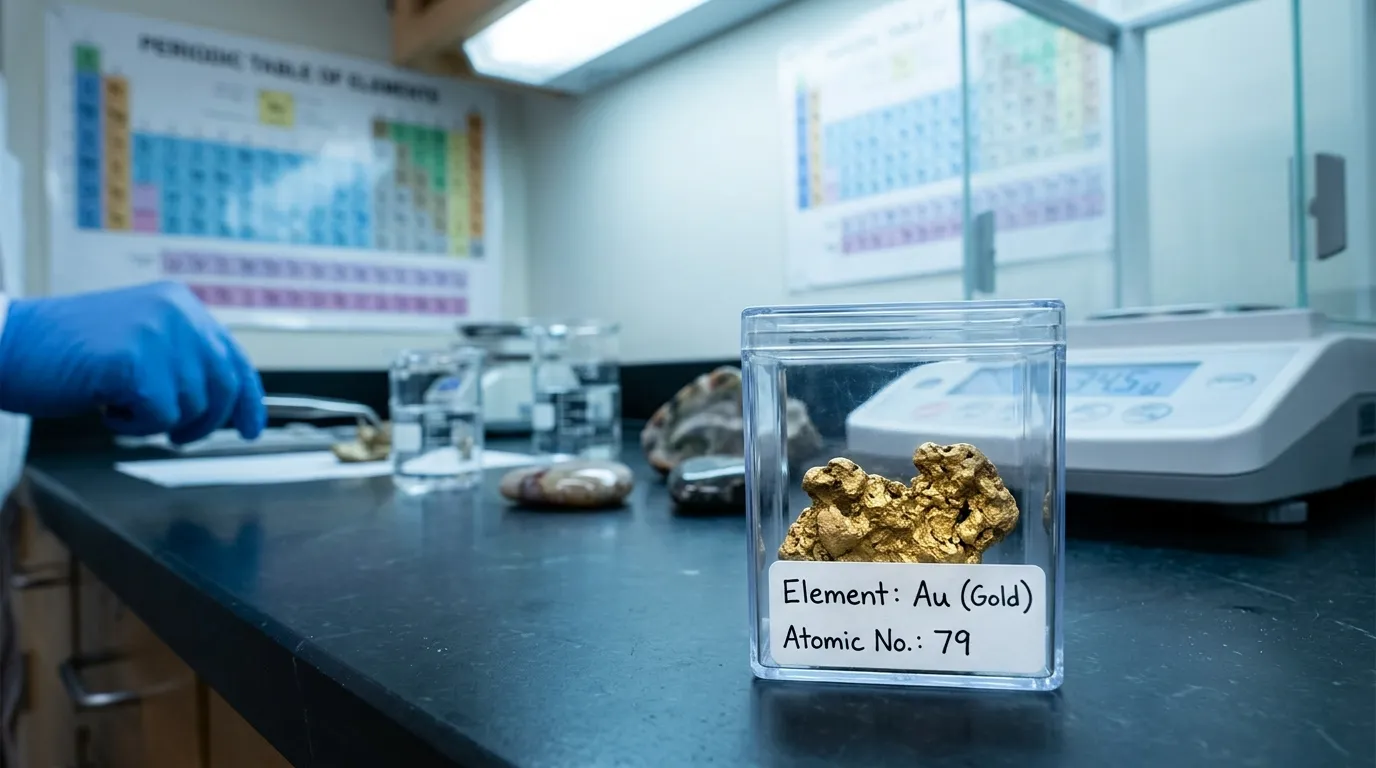
Long before modern chemists asked what is the atomic number of gold, ancient civilizations revered it. Gold has been a symbol of wealth, power, and divine connection for thousands of years.
- The Ancient Egyptians buried their pharaohs in solid gold coffins.
- The Lydians minted the first gold coins around 600 BC, revolutionizing global trade.
- The Aztec and Inca empires used gold extensively in their religious ceremonies.
Because gold is found in its native, uncombined state in nature, early humans could easily collect and shape it without complex smelting processes. Its radiant, sun-like shine made it the ultimate status symbol, sparking massive historical events like the California Gold Rush.
Industrial and Technological Applications
While jewelry and bullion remain its most famous uses, modern industry heavily relies on this metal. Knowing what is the atomic number of gold helps engineers exploit its properties for advanced technology.
- Electronics: Gold is a highly efficient conductor of electricity that does not corrode. It is used in the connectors of computers, smartphones, and aerospace technology to ensure reliable data transmission.
- Medicine: Gold compounds are utilized to treat conditions like rheumatoid arthritis. Additionally, isotopes of gold are used in radiation therapy for certain types of cancer.
- Aerospace: Gold-coated visors protect astronauts from harmful solar radiation, as gold excels at reflecting infrared light while letting visible light pass through.
To see ongoing advancements in industrial applications, the World Gold Council provides excellent market and technological insights.
Environmental and Economic Aspects of Gold Mining
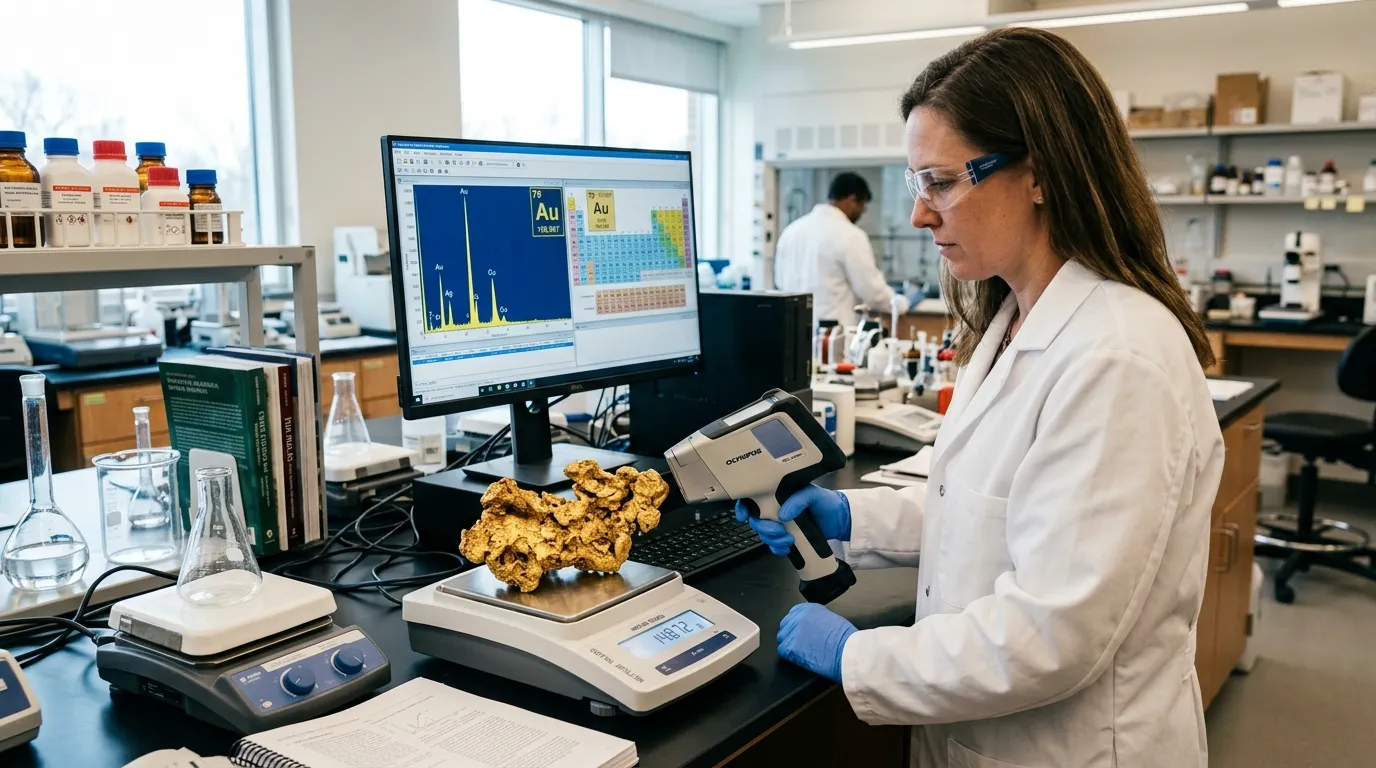
Extracting this dense element from the earth is a labor-intensive and environmentally taxing process. Modern gold mining often requires moving tons of earth to yield just a few grams of gold.
- Economic Impact: Gold remains a stabilizing force in the global economy. Central banks hold massive reserves to hedge against inflation and currency fluctuations.
- Environmental Challenges: The use of cyanide and mercury in extraction processes poses significant environmental risks. Toxic runoff can severely impact local water supplies and ecosystems.
- Recycling Initiatives: Because of these environmental concerns, recycling electronic waste to recover gold has become increasingly vital. Recycling reduces the carbon footprint and minimizes ecological destruction.
Comparing Gold to Other Precious Metals
To fully contextualize what is the atomic number of gold, it helps to compare it to other prominent metals in its class.
|
Feature |
Gold (Au) |
Silver (Ag) |
Platinum (Pt) |
Copper (Cu) |
|---|---|---|---|---|
|
Atomic Number |
79 |
47 |
78 |
29 |
|
Density (g/cm³) |
19.32 |
10.49 |
21.45 |
8.96 |
|
Melting Point |
1,064°C |
961°C |
1,768°C |
1,085°C |
|
Reactivity |
Extremely Low |
Low |
Very Low |
Moderate |
|
Primary Use |
Currency, Tech |
Electronics, Jewelry |
Catalytic Converters |
Wiring, Plumbing |
Common Mistakes to Avoid When Studying Gold
When students and enthusiasts first learn what is the atomic number of gold, they often make a few conceptual errors.
- Confusing Atomic Number with Atomic Mass: The atomic number is 79 (the number of protons). The atomic mass is roughly 197 (the combined protons and neutrons). Do not mix these up.
- Assuming Gold is the Densest Metal: While gold is exceptionally heavy, elements like osmium and platinum are actually denser.
- Misunderstanding “Fools Gold”: Pyrite, often called fool’s gold, is an iron sulfide. It contains absolutely zero gold atoms.
- Believing Gold is Completely Unreactive: While highly inert, gold can be dissolved by a specific mixture of nitric and hydrochloric acid known as aqua regia.
Expert Insights and Pro Tips
To truly master your understanding of what is the atomic number of gold, consider these expert insights from leading chemists.
- Pro Tip 1: When investing in gold jewelry, remember that 24-karat gold is pure gold but is often too soft for daily wear. It is usually alloyed with copper or silver to increase durability.
- Pro Tip 2: If you are studying chemistry, pay close attention to the relativistic effects of gold’s heavy nucleus. This effect is exactly why gold is yellow instead of silvery-white like most other transition metals.
- Expert Insight: According to research from the Royal Society of Chemistry, much of the gold found on Earth today was likely deposited by meteorite impacts billions of years ago during the Late Heavy Bombardment.
Understanding what is the atomic number of gold unlocks the secrets behind its enduring value and incredible properties. From ancient currency to modern electronics, this element remains unmatched. Are you ready to explore more fascinating chemistry topics? Share this article with fellow science enthusiasts and continue your learning journey today!
FAQs
What is the atomic number of gold and what does it mean?
When you ask what is the atomic number of gold, the answer is 79. This means that every single atom of gold contains exactly 79 protons in its nucleus, which defines its chemical identity.
Why is gold’s atomic number exactly 79?
The number 79 is a fundamental property of the universe. Elements are defined by their proton count. Gold possesses 79 protons; if it had a different number, it would literally be a different element entirely.
How does the atomic number of gold affect its reactivity?
Because what is the atomic number of gold is 79, its heavy nucleus exerts a massive pull on its orbiting electrons. This stabilizes the outer electrons, making gold extremely unreactive and resistant to tarnishing or rusting.
What is the chemical symbol for gold?
The chemical symbol for gold is Au. This abbreviation originates from the Latin word “aurum,” which historically translates to “shining dawn.”
Is gold considered a transition metal?
Yes, gold is a transition metal. It is located in the center block of the periodic table, which features metals known for their high density, high melting points, and excellent conductivity.
How many protons, neutrons, and electrons does gold have?
A neutral atom of gold has 79 protons and 79 electrons. Its most common stable isotope has 118 neutrons, bringing its total atomic mass to approximately 197.
What happens if you change the atomic number of gold?
You cannot change the atomic number of an element without triggering a nuclear reaction. If you removed one proton from a gold atom, it would cease to be gold and would become platinum (atomic number 78).
Why is gold so heavy compared to other metals?
Gold is exceptionally heavy because its atoms are packed very closely together and its individual atoms have a high mass. Its density is 19.32 grams per cubic centimeter, making it much heavier than lead.
How does gold’s atomic structure make it malleable?
The metallic bonding in gold allows its atoms to slide past one another without breaking the overall structure. This means the metal can be hammered into incredibly thin sheets without fracturing.
Can gold be created artificially in a lab?
Yes, scientists can create gold artificially by bombarding lighter elements with neutrons in a nuclear reactor. However, this process is incredibly expensive, yields microscopic amounts of radioactive gold, and is completely impractical for commercial use.