Have you ever wondered where is gold found naturally? From deep underground veins to flowing riverbeds, this precious metal hides in fascinating geological formations across the globe.
This comprehensive guide explores the exact locations and geological environments that host gold deposits. We break down top producing countries, detail the differences between lode and placer deposits, share expert prospecting tips, and highlight common mistakes to avoid during your search.
Understanding the Geology: Where Is Gold Found Naturally?
Gold is a rare, dense metal that forms deep within the Earth’s crust and is brought to the surface through intense geological activity. To understand the origins of this precious metal, we must look at the specific rock formations and natural environments that host it.
Primary Hard Rock (Lode) Deposits
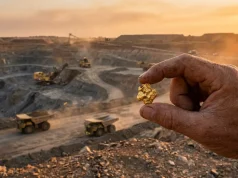
The majority of the world’s commercial gold comes from hard rock or lode deposits. These formations occur when mineral-rich hydrothermal fluids rise through cracks and faults in the Earth’s crust. As the fluids cool, they deposit gold alongside quartz and other minerals. Miners must excavate deep underground or create massive open-pit mines to extract this ore.
Placer and Alluvial Deposits
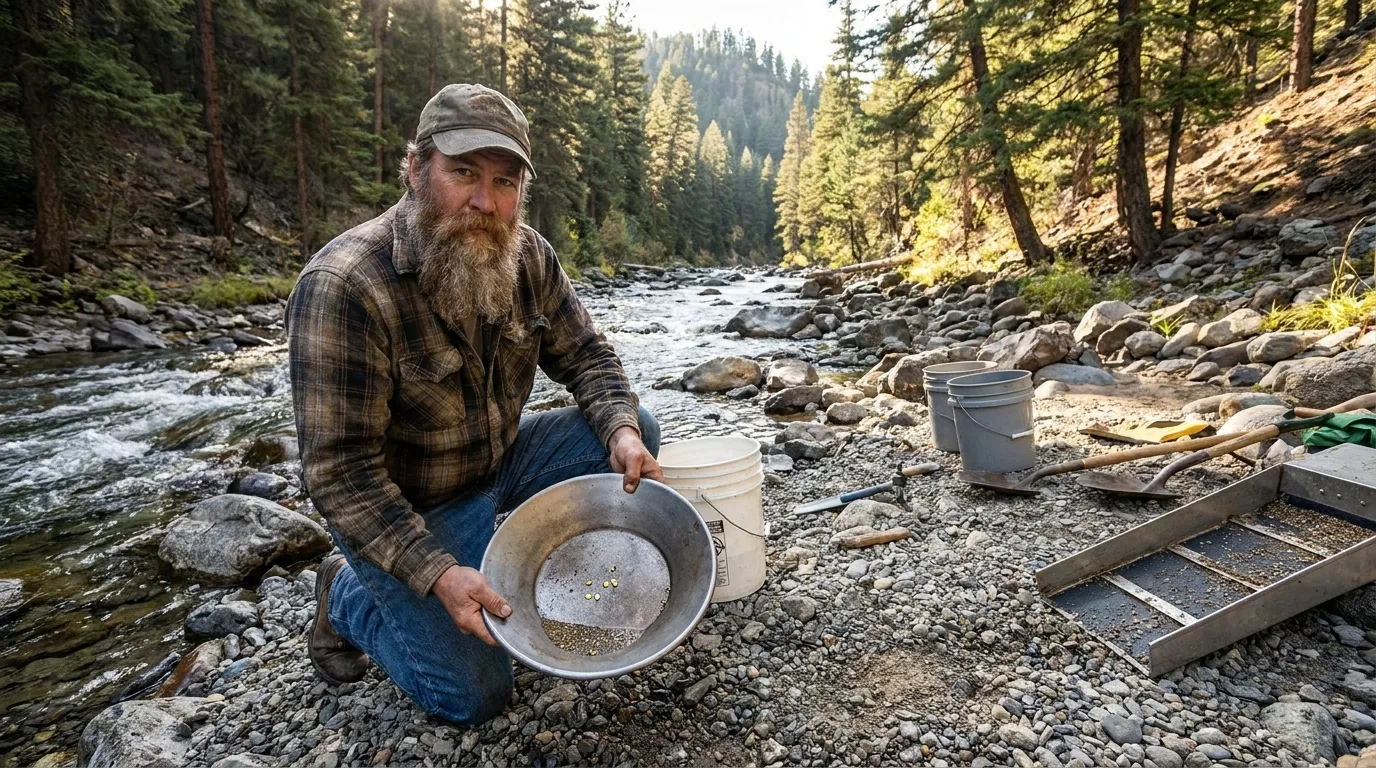
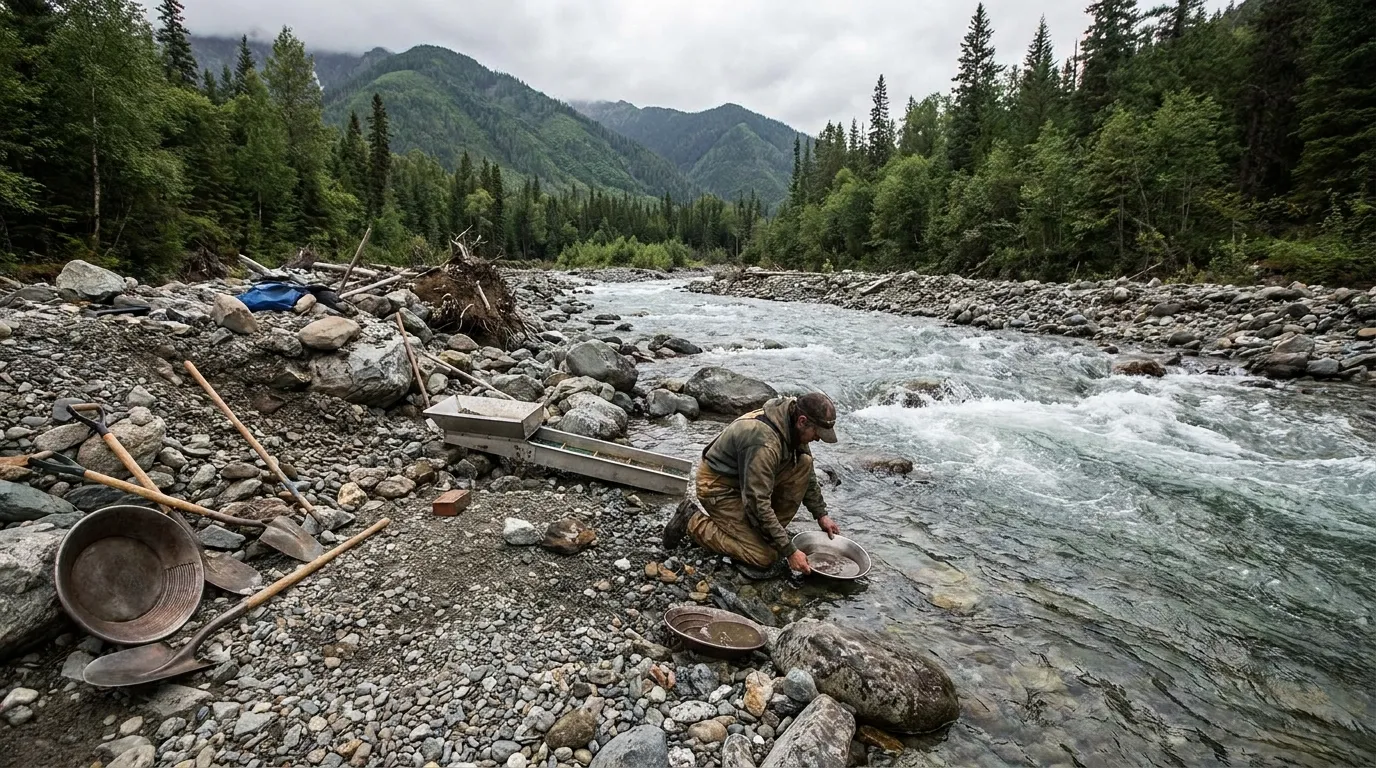
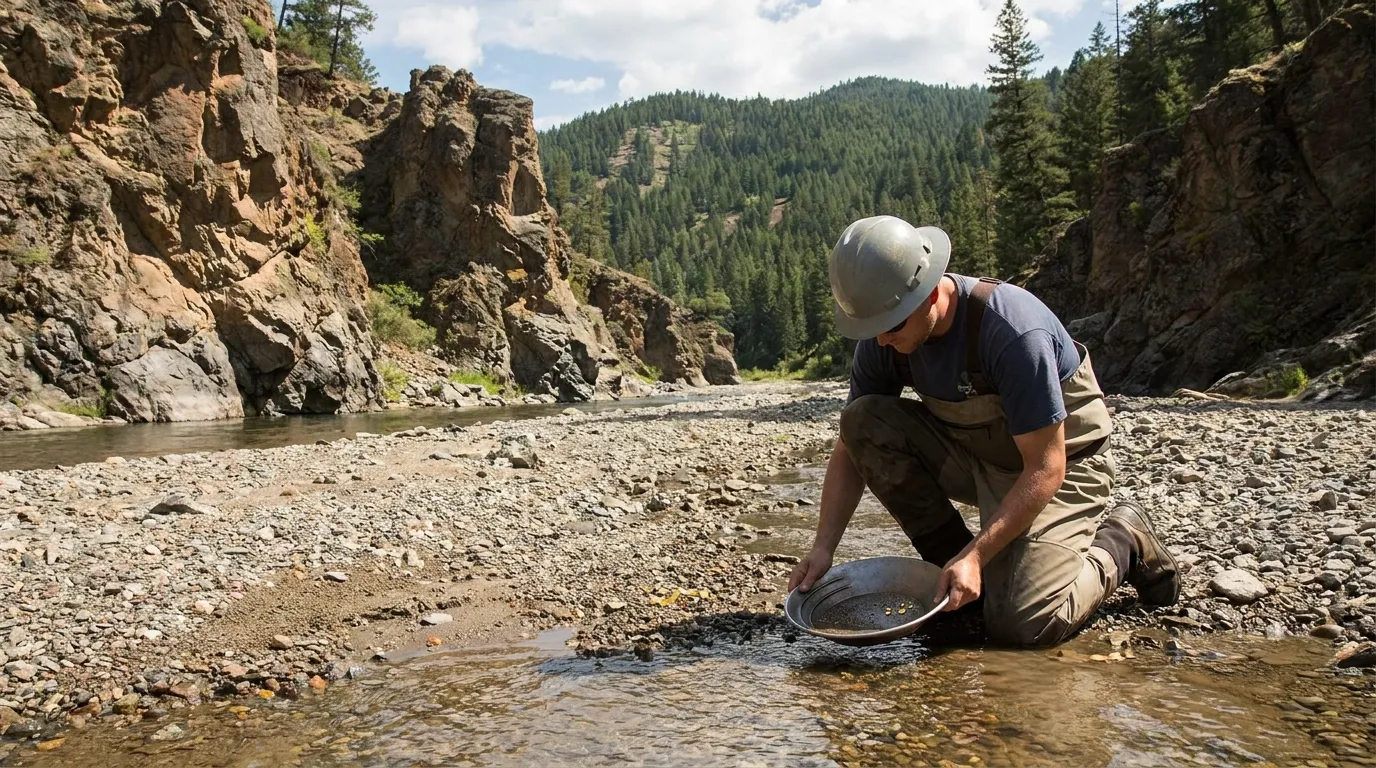
Over millions of years, erosion breaks down hard rock deposits. Heavy rains and melting glaciers wash the gold particles down mountain sides and into streams. Because gold is incredibly dense, it sinks to the bottom of riverbeds, concentrating in specific areas known as placer deposits. If you are learning gold panning techniques, river bends and bedrock crevices are exactly where you want to look.
Volcanic and Epithermal Formations
Volcanic activity plays a massive role in gold distribution. Epithermal deposits form at shallow depths near volcanic centers. The famous “Ring of Fire” around the Pacific Ocean hosts numerous epithermal deposits, making countries like Indonesia and Papua New Guinea major players in the mining industry.
Top Gold-Producing Countries Around the World
Gold exists on every continent except Antarctica (where mining is banned by international treaty). However, certain regions dominate the global supply chain.
China: The Global Leader
China consistently ranks as the top gold-producing nation. The majority of their mining operations are concentrated in the eastern provinces, particularly Shandong. The country not only mines massive quantities but also leads the world in consumer demand for jewelry and investments.
Australia: Massive Reserves
Australia holds the largest known gold reserves globally. Western Australia, specifically the area around Kalgoorlie, features massive open-pit operations like the Super Pit. The country’s rich mining history continues to drive its strong economy.
Russia: Vast Untapped Potential
Russia contains massive, largely untapped reserves in Siberia and the Russian Far East. The country heavily mines both hard rock and alluvial deposits. The government actively purchases domestic gold to strengthen its national reserves and diversify away from foreign currencies.
The United States: The Nevada Gold Rush
In the US, Nevada accounts for roughly 75% of the country’s total production. The Carlin Trend in Nevada is a world-class mining district featuring microscopic gold embedded in sedimentary rock. If you want to explore the legacy of these regions, reading up on the history of the gold rush provides great context.
Comparison Table: Types of Gold Deposits
|
Deposit Type |
Geological Formation |
Primary Extraction Method |
Common Locations |
|---|---|---|---|
|
Lode (Hard Rock) |
Quartz veins within solid bedrock |
Underground or open-pit mining |
Witwatersrand (South Africa), Carlin Trend (USA) |
|
Placer (Alluvial) |
Riverbeds, streams, and glacial runoff |
Panning, sluicing, dredging |
Klondike (Canada), Otago (New Zealand) |
|
Epithermal |
Shallow volcanic rock fractures |
Open-pit mining |
Ring of Fire (Indonesia, Peru) |
|
Seafloor |
Hydrothermal vents on the ocean floor |
Experimental deep-sea mining |
Papua New Guinea coast (experimental) |
Expert Insights & Pro Tips for Prospectors
Whether you are a hobbyist or an aspiring professional, finding gold requires patience, research, and the right approach. Here are expert insights to improve your success rate.
- Study Geological Maps: Do not just guess where to look. Utilize resources from the United States Geological Survey (USGS) to find historical mining data and fault lines.
- Look for Black Sand: When panning in rivers, keep an eye out for black sand (magnetite and hematite). Gold is heavy and settles in the exact same spots as these dense iron sands.
- Hunt in the Inside Bends: Water slows down on the inside curves of rivers. This drop in velocity causes heavy materials like gold to drop out of the current and settle into the gravel.
- Upgrade Your Gear: Start with a basic pan, but as you advance, consider investing in proper gold prospecting equipment like sluice boxes or high-bankers to process dirt faster.
Common Mistakes to Avoid When Searching for Gold
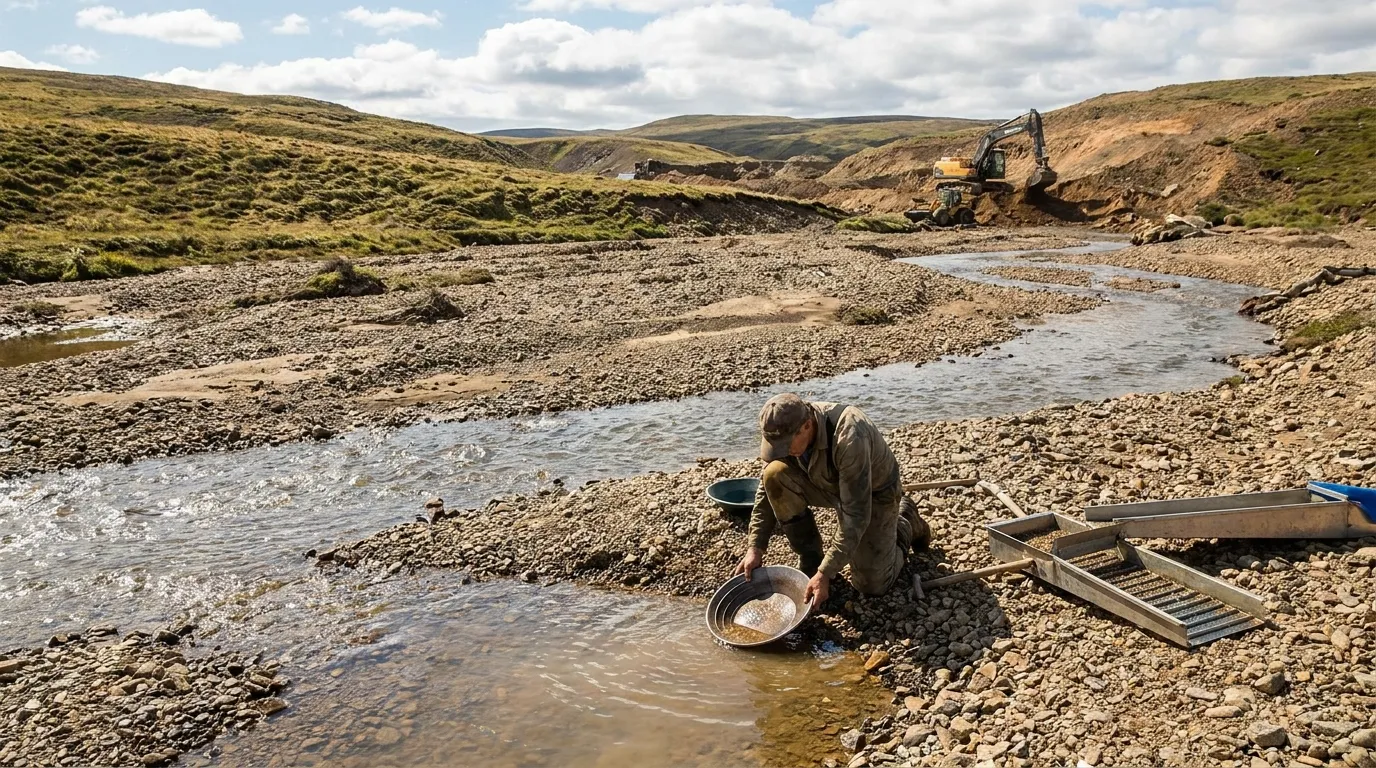
Many beginners rush into prospecting without a solid plan. Avoid these frequent pitfalls to save time and frustration.
Ignoring Local Laws and Claims
Never assume land is open for public use. Prospecting on an active, privately owned mining claim is illegal. Always verify land ownership through local bureaus of land management before you dip a pan in the water.
Digging in the Wrong Spots
Many beginners dig aimlessly in the center of fast-moving streams. Gold does not settle in high-velocity water. You must dig down to the bedrock or search behind large boulders where the current naturally slows.
Misidentifying Fool’s Gold
Iron pyrite (fool’s gold) crushes into powder when struck with a hammer. Real gold is highly malleable and will flatten or bend. Save yourself the disappointment by learning basic field tests.
The Future of Gold Mining: Ocean Floors and Space
As land-based reserves slowly deplete, scientists are looking toward unconventional sources. The National Oceanic and Atmospheric Administration (NOAA) notes that the world’s oceans contain millions of tons of dissolved gold. However, the concentration is incredibly diluted, making extraction economically impossible with current technology.
Similarly, asteroid mining remains a fascinating theoretical concept. Certain near-Earth asteroids contain staggering amounts of precious metals. While we are decades away from harvesting space gold, it highlights the enduring value and scarcity of this element on our home planet.
Conclusion
Understanding where is gold found requires a grasp of geology, history, and modern mining techniques. From the quartz veins of Nevada to the riverbeds of the Klondike, this precious metal continues to captivate humanity. Take these insights, grab your gear, and start your own prospecting adventure today.
FAQs
1. Where is the highest concentration of gold found?
The highest concentration of known gold reserves is in Australia, which holds roughly 9,900 tonnes. Historically, the Witwatersrand Basin in South Africa has produced the most gold of any single region.
2. Can you find gold in any river?
No. You will only find gold in rivers that cut through gold-bearing geological formations. Researching historical mining records is the best way to determine if a specific river contains gold.
3. Is there gold in the ocean?
Yes, there are millions of tons of dissolved gold in ocean water, and solid deposits near deep-sea hydrothermal vents. However, extracting it is currently too expensive to be profitable.
4. How deep do gold miners dig?
Open-pit mines are typically a few hundred meters deep. Underground mines go much further. The Mponeng gold mine in South Africa is the deepest in the world, reaching over 2.5 miles below the surface.
5. What is the difference between lode and placer gold?
Lode gold is trapped inside solid rock formations (veins). Placer gold has been eroded from rock and washed into waterways, settling as loose flakes or nuggets in dirt and gravel.
6. What rocks are most commonly associated with gold?
Gold is frequently found inside quartz veins. It is also commonly associated with metamorphic rocks like schist and slate, as well as areas featuring high concentrations of iron pyrite and granite.
7. Can I use a metal detector to find gold?
Yes, specialized gold metal detectors use high frequencies to detect small nuggets in highly mineralized soil. They are highly effective in dry desert environments and old mining tailings.
8. Which US state produces the most gold?
Nevada produces the vast majority of gold in the United States, accounting for nearly 75% of the nation’s output. The state uses large-scale open-pit mining to extract microscopic gold.
9. Who owns the gold you find on public land?
In many countries, if you find gold on designated recreational panning areas or unclaimed public land, you are allowed to keep it. However, you must always verify local mineral rights and regulations.
10. How do geologists find new gold deposits?
Geologists use a combination of satellite imaging, soil sampling, and core drilling. They look for specific fault lines, mineral alterations, and rock types that indicate hydrothermal fluid movement.